Review: Fishing Fisherman Beer SVG for Embroidery
As a designer who spends half my life digitizing and the other half stitching, I have learned to look past the glossy preview images. We all know that what looks crisp on a screen does not always translate cleanly to fabric. When I first pulled up the Fishing Fisherman Beer SVG T-shirt design, I was looking for more than just a cute graphic. I was evaluating its potential as a reliable asset for my craft business and for clients who demand professional-grade finished products.
This piece falls squarely into the Crafts and Graphics categories, but its real value lies in how it performs under the needle. Let’s break down this vector file from the perspective of someone who has to make it work on actual garments, patches, and home goods.
First Impressions and Visual Personality
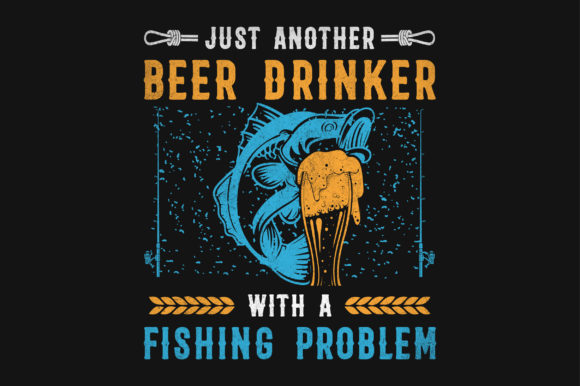
The immediate mood of this design is relaxed, rustic, and undeniably masculine. It taps into that popular "weekend warrior" aesthetic that sells well year-round, not just during fishing season. The combination of angling imagery with beer motifs creates a narrative that is easy for customers to connect with. It feels like a story about unwinding after a long day on the water.
From a layout perspective, the composition appears balanced. For embroidery, balance is critical. If one side is too heavy with detail while the other is sparse, the fabric can pucker or pull unevenly during stitching. The description notes that the file is made with 100 vector shapes. This is a promising sign. Vector-based designs usually offer cleaner lines and easier scalability compared to raster images, which is essential when you need to resize a design for different hoop sizes without losing clarity.
Real-World Application: The Custom Sweatshirt Test
To truly evaluate a design, you have to imagine it on a product. I visualized this Fishing Fisherman Beer SVG T-shirt graphic on a heather grey crewneck sweatshirt. This is a staple item for any small shop product line. The texture of fleece or cotton blend requires a design that is bold enough to stand out but not so dense that it turns the garment into a stiff board.
In this scenario, the design would likely serve as a central chest piece or a larger back print. For a chest placement, I would recommend scaling it down to fit within a 5x7 inch hoop. The thematic elements—likely involving rods, reels, or hops—need to retain their identity at smaller sizes. If the details are too fine, they may get lost in the fabric texture. However, since the file allows for easy color changes, I could simplify the palette. Using two or three thread colors instead of a complex gradient can enhance stitching clarity and reduce machine run time.
Versatility Across Product Lines
Beyond sweatshirts, this design has legs in other areas of custom apparel and home decor. Consider an embroidered patch for a baseball cap. Caps are curved surfaces, which means the design must be narrow enough to fit the front panel without distorting. If the original vector is wide, I would need to check if it can be cropped or simplified for a 4x4 inch hoop application.
It also works well for tote bag designs. A canvas tote is sturdy and handles higher stitch density better than thin t-shirt material. Here, you could go larger, perhaps using a fill stitch for the background elements to create a solid, impactful look. For baby embroidery, however, I would hesitate. The theme is adult-oriented, and the complexity might be too much for delicate infant fabrics. Stick to adult and teen markets for this specific graphic.
Technical Considerations for Stitching
While the product description mentions AI, EPS, SVG, and PNG files, it is crucial to understand what these mean for your embroidery machine. An SVG or EPS is a vector file, which is great for editing in software like Illustrator or CorelDraw. However, most embroidery machines require specific digitized formats like PES, DST, or JEF.
Important Note: The description provided does not explicitly list digitized embroidery file formats. Before purchasing or using this for commercial embroidery projects, you must confirm if the seller provides pre-digitized files or if you are expected to digitize the vector yourself. If you are digitizing it from the vector shapes, pay close attention to stitch density. Vector shapes can sometimes result in overly dense fills if not manually adjusted. Always test on scrap fabric first.
Fabric and Stabilizer Choices
The success of this design depends heavily on your choice of stabilizer. For a t-shirt, which is stretchy and thin, a cut-away stabilizer is non-negotiable. It provides the necessary support to prevent the stitches from pulling the fabric out of shape over time. For a woven apron or a kitchen towel, a tear-away stabilizer might suffice, but given the likely density of a graphic like this, I would still lean toward cut-away for durability.
Thread color contrast is another key factor. If you are stitching on dark fabric, ensure your design includes light-colored threads for visibility. Conversely, on light fabric, dark threads will pop. The ability to easily change colors, as mentioned in the file description, is a huge advantage here. You can create multiple variations for different inventory items without redesigning the whole piece.
Commercial Viability and Brand Consistency
For Etsy sellers and boutique owners, consistency is key to building trust. A design like Fishing Fisherman Beer SVG T-shirt fits well into a broader collection of outdoor or hobby-themed graphics. If you specialize in personalized gifts for dads, husbands, or brothers, this asset is a strong contender. It appeals to a specific demographic that values humor and hobbies.
When creating printable mockups or digital product previews, use high-quality images that show the texture of the stitches. Buyers want to see that the design is not just a flat print but a textured, tactile embroidered product. Highlight the quality of the satin stitch borders or the smoothness of the fill stitches in your photos. This attention to detail increases perceived value and justifies a higher price point for your handmade product.
Avoiding Common Pitfalls
There are areas where caution is needed. Tiny lettering, if present in the design, can be problematic. Small text often becomes illegible when stitched, especially on textured fabrics like towels or fleece. If the design includes small brand names or slogans, consider removing them or enlarging them significantly. Also, watch out for dense stitch areas in corners. These can cause bunching. Trimming jump stitches carefully and using proper hooping techniques will mitigate these issues.
Always check the licensing terms. Just because you bought the graphic does not automatically grant you the right to sell thousands of finished items without restriction. Confirm whether the license covers commercial use for physical products and if there are limits on production volume. This is vital for protecting your craft business from legal issues down the road.
Final Verdict
The Fishing Fisherman Beer SVG T-shirt design is a solid addition to a designer’s library, provided you approach it with technical awareness. It offers strong visual appeal for a niche market and versatility across various apparel and home goods. Its vector nature allows for customization, which is essential for meeting diverse client needs.
However, its success relies on your preparation. Test it on different fabrics, adjust your stitch density, choose the right stabilizer, and verify your file formats. When executed with care, this design can elevate your custom apparel offerings, drive engagement on your Etsy listings, and result in a finished product that customers are proud to wear or gift. It is not just a graphic; it is a tool for creating memorable, tangible experiences through embroidery.