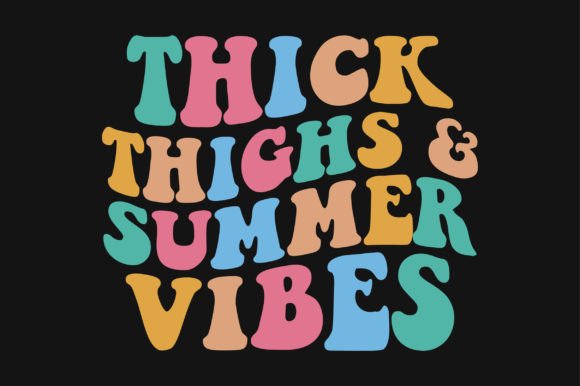
Summer Retro Wavy SVG: A Designer's Review
As a designer who spends more time staring at stitch maps than most people care to admit, I approach new design assets with a healthy dose of skepticism. We have all been there: you download a file that looks crisp on the screen, only to find it turns into a bird's nest of thread once it hits the fabric. That is why I took a close look at the Summer Retro Wavy SVG Vector T-shirt design before committing it to any client work or personal embroidery project. This isn't just about whether it looks cute; it is about whether it holds up under the needle and delivers value to a small business owner or hobbyist.
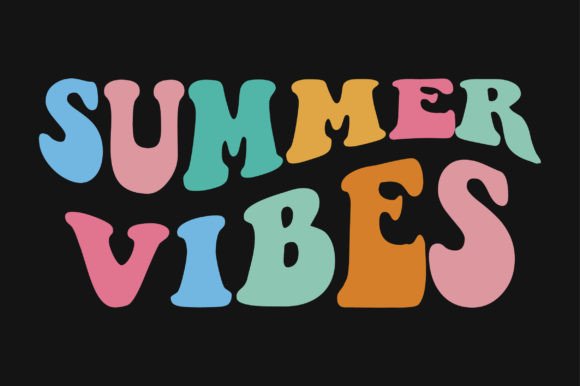
The first thing that strikes me about this graphic is its mood. It captures that specific, nostalgic summer vibe perfectly—think 70s sunsets, vintage surf shops, and warm evenings. The "wavy" element is the star here. In the world of Graphics and vector art, waves can sometimes look clunky if the bezier curves aren't smooth, but this design feels fluid. Since the description notes it is made with 100 vector shapes, the scalability is theoretically infinite. For us in the Crafts community, this means we can shrink it down for a baby onesie or blow it up for a oversized tote bag without losing definition, provided we handle the digitizing or conversion correctly.
Real-World Application: The Boutique Tote Test
To truly evaluate this design, I imagined a real-life scenario that many Etsy sellers and boutique owners face daily: creating a line of custom canvas tote bags for a local farmer's market. Canvas is a tricky beast; it has a heavy fabric texture that can swallow fine details. I visualized placing the Summer Retro Wavy SVG Vector T-shirt graphic right in the center of a natural cotton tote.
The retro aesthetic pairs beautifully with earthy tones. If you are using this for a handmade product, imagine pairing terracotta, mustard yellow, and sage green thread colors against the natural canvas. The wavy lines suggest movement, which adds life to a static bag. However, because this is a vector file (SVG, EPS, AI), it is not yet a machine embroidery design in the traditional sense. You cannot simply load an SVG into most home embroidery machines and expect magic. You either need a machine that accepts SVG natively for print-and-cut applications, or more likely, you need to use this vector as a base to create or purchase a corresponding embroidery file with defined stitch types like satin stitch for the outlines and fill stitch for the larger colored sections.
If you are an apparel decorator converting this yourself, the clean lines of the vector make it an excellent candidate for appliqué. You could cut fabric pieces in retro patterns and use the vector path as your guide. This would create a highly textured, premium finished product that stands out from standard flat embroidery. For a personalized gift or a high-end boutique item, this extra effort elevates the perceived value significantly.
Navigating Fabric Challenges and Stitch Density
While the vector source is flawless, the transition to thread requires careful planning. Where should you use caution? Anytime you are dealing with stretchy fabric like a lightweight t-shirt or a fitted cap, the density of your stitches matters immensely. If you convert those 100 vector shapes directly into dense fills without adjusting the stitch density, you risk puckering the garment. The waves might distort, turning a cool retro look into a wrinkled mess.
For sweatshirt embroidery or heavier materials like hoodies, this design is much more forgiving. The thickness of the fleece supports heavier stitching, allowing the waves to pop with dimension. However, be mindful of small hoop sizes. If you are trying to fit this onto a pocket or a child's baby embroidery project, you may need to simplify the design. Those 100 vector shapes might contain tiny details that simply cannot be stitched at a 2-inch scale without breaking threads or losing clarity. Always test the design on scrap fabric first. This is non-negotiable.
Curved surfaces, such as caps, present another hurdle. The wavy nature of the design could actually work in your favor here, following the curve of the crown, but you must ensure your stabilizer game is strong. A tear-away stabilizer might not be enough for a design with this much coverage; consider a cut-away stabilizer for long-term durability, especially if the item is meant to be washed frequently.
Commercial Viability and Brand Consistency
For the craft business owner, consistency is key. One of the strongest selling points of the Summer Retro Wavy SVG Vector T-shirt is the ease of changing colors. The file description highlights this, and in practice, it is a huge time-saver. You can quickly mock up ten different colorways to show a client or to create a cohesive collection for your online shop. Whether you are making holiday embroidery gifts or year-round merchandise, being able to swap a summer orange for a winter blue instantly expands your product line.
This flexibility also aids in creating professional printable mockups. Before you ever stitch a single thread, you can place the vector onto digital photos of t-shirts, pillows, or aprons to gauge visual appeal. This helps in building customer trust; they know exactly what they are buying. A clear, high-quality preview often leads to higher buyer engagement compared to vague descriptions.
However, a word of warning regarding licensing: while the file comes in multiple formats (AI, EPS, SVG, PNG), always confirm the specific license terms before selling. Just because you own the file doesn't automatically mean you have unlimited commercial rights to sell the digital file itself or the physical goods, depending on the creator's policy. Check this before listing items as small shop products.
Final Verdict for the Practical Maker
In conclusion, the Summer Retro Wavy SVG Vector T-shirt is a robust starting point for a variety of creative endeavors. It shines brightest when used on stable fabrics like canvas totes, denim jackets, or structured pillow covers where the retro waves can be fully appreciated without distortion. It is less ideal for tiny, intricate applications unless simplified.
My advice to fellow designers and makers is to treat this vector as a blueprint. Respect the geometry, choose your thread colors with intention to maximize contrast, and never skip the test stitch. When executed with care, this design has the potential to become a staple in your catalog of custom apparel and home decor. It bridges the gap between digital precision and tactile charm, offering a reliable foundation for anyone looking to add a touch of retro sunshine to their embroidery project lineup.